
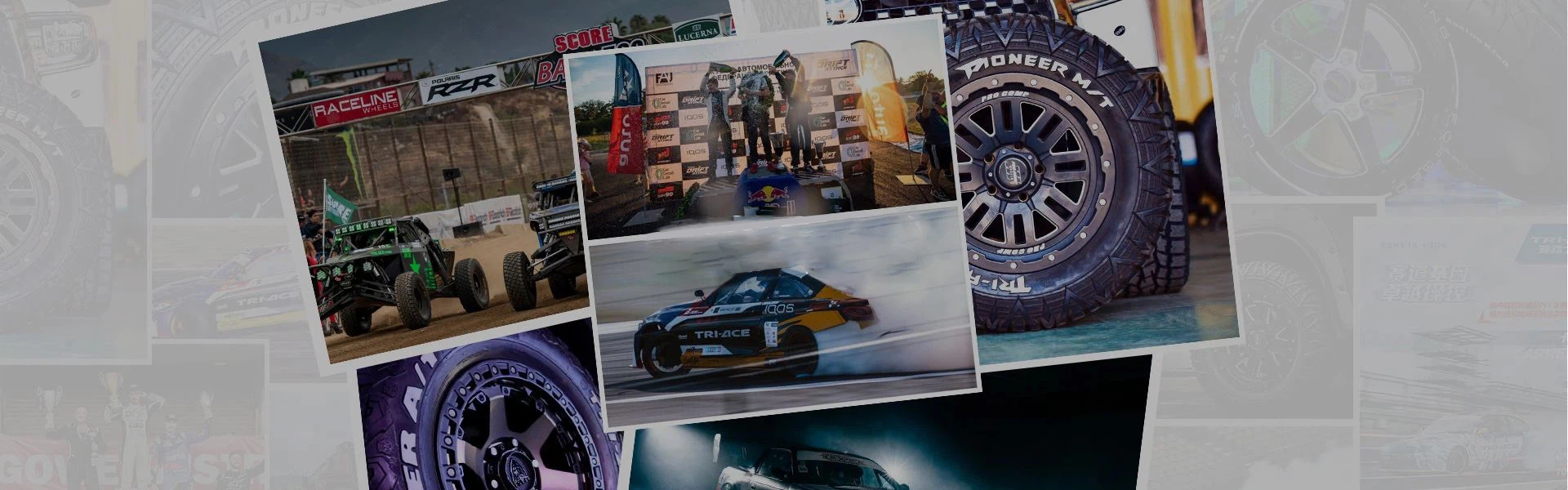
Drifting is a demanding motorsport that requires precise vehicle control, consistent tire behavior, and a careful balance between grip and controlled wheelspin. One of the most important factors affecting drift performance is tire selection.
Although drift tires and ordinary street tires may look similar, they are designed for different driving conditions. Their rubber compounds, tread patterns, construction, heat resistance, and performance characteristics can vary significantly.
Understanding the difference between drift tires and street tires can help drivers, racing teams, tire distributors, and motorsport businesses choose the right tires for their applications.
In this guide, we explain how drift tires differ from regular street tires, what features matter in drift competition, and how to select suitable tires for drifting.
What Are Drift Tires?
Drift tires are tires selected or developed for controlled sliding during drifting. Depending on the application, they may be purpose-built competition tires or performance tires adapted for drift use.
During a drift, the driver deliberately causes the rear tires to lose some traction while maintaining control of the vehicle through steering, throttle, and countersteering.
Unlike ordinary road driving, drifting involves sustained wheelspin, high tire temperatures, significant lateral forces, and rapid changes in vehicle direction. The tires must respond predictably throughout these conditions.
Important characteristics of drift tires include:
Predictable grip during sustained wheelspin
Consistent performance as tire temperature changes
Suitable construction for repeated high-load driving
A rubber compound matched to the vehicle and track
Tread design suited to the intended surface and conditions
Predictable behavior during transitions and tandem drifting
The ideal drift tire depends on the vehicle's power, weight, suspension setup, driving style, competition rules, and track surface.
What Are Street Tires?
Street tires are designed primarily for everyday road driving. Their performance requirements usually include wet and dry traction, braking, comfort, noise control, durability, and rolling resistance.
Depending on the product category, street tires may prioritize fuel efficiency, long tread life, all-weather usability, or sporty handling.
For ordinary driving, these characteristics are essential. However, drifting places different demands on tires.
Repeated wheelspin and sustained lateral loading can generate substantial heat, and a street tire may not maintain the same behavior under prolonged drifting as a tire selected specifically for motorsport use.
Some performance street tires can be used for occasional drifting, but their suitability depends on the tire design, driving conditions, and vehicle setup.
Drift Tires vs. Street Tires: Key Differences
The main differences between drift tires and street tires involve their intended use, grip characteristics, heat management, durability under repeated sliding, and overall performance priorities.
| Feature | Drift Tires | Street Tires |
|---|---|---|
| Primary purpose | Controlled sliding and drift competition | Everyday road driving |
| Grip characteristics | Selected for predictable behavior during drifting | Designed for road traction and vehicle control |
| Heat management | Important under sustained wheelspin | Designed around normal road-use conditions |
| Rubber compound | May be specialized for competition | Varies by road tire category |
| Tread design | Depends on the competition and application | Designed for road traction, drainage, noise, and wear |
| Wear characteristics | Can wear rapidly during intensive drifting | Generally optimized for normal road use |
| Wet-weather performance | Depends on the specific tire | Usually a key design consideration |
| Typical applications | Drift practice, drift events, competition | Commuting, touring, and everyday driving |
These are general distinctions rather than universal rules. Actual performance depends on the tire model, compound, construction, operating temperature, and vehicle setup.
1. Grip: Controlled Sliding vs. Everyday Traction
Grip is one of the most important differences between drift tires and street tires.
For everyday driving, tires need to provide reliable traction during acceleration, braking, and cornering. Drivers generally want to maintain maximum available traction and avoid unintended sliding.
Drifting has a different objective. The driver needs to control the transition between grip and slip while maintaining a specific drift angle and direction.
A suitable drift tire should therefore provide predictable feedback and consistent behavior when the rear tires are sliding.
However, drift tires are not necessarily designed to have less grip in every situation. Some competition tires offer substantial grip while allowing experienced drivers to maintain controlled slides.
The right choice depends on the vehicle's power, driving technique, track layout, and competition requirements.
2. Heat Resistance and Temperature Consistency
Tire temperature is a major factor in drift performance.
During sustained wheelspin, friction between the tire and track generates heat. Repeated transitions and high-speed cornering can further increase thermal stress.
If a tire becomes excessively hot, its grip and handling characteristics may change. This can make the car more difficult to control and lead to inconsistent performance between runs.
Drift tire selection should therefore consider the compound's operating characteristics, the tire's construction, and the expected duration and intensity of each run.
Street tires are designed around a broad range of everyday driving conditions. They are not all engineered to withstand the repeated thermal demands of drift competition.
For teams participating in frequent drift events, selecting tires appropriate for the expected temperature and workload is essential.
3. Tread Pattern and Tire Design
Tread pattern influences traction, water evacuation, noise, and wear.
Street tires commonly use grooves and tread blocks designed to support wet-road performance, braking, comfort, and durability.
Drift tires may use different tread designs depending on whether they are intended for competition, practice, or other performance applications.
For drifting on dry tracks, drivers often prioritize predictable behavior under sustained slip. For wet conditions, water evacuation becomes especially important.
A tire's tread pattern alone does not determine its drifting performance. Rubber compound, casing construction, tire pressure, temperature, and vehicle setup also play significant roles.
4. Tire Wear and Operating Costs
Drifting can cause rapid tire wear because the rear tires repeatedly spin under load.
The rate of wear depends on several factors, including:
Vehicle horsepower and torque
Vehicle weight
Tire compound and construction
Tire pressure and temperature
Track surface and abrasiveness
Drift angle and driving style
Length and number of runs
Street tires used for drifting may wear quickly, especially when the vehicle has high power or the track surface is abrasive.
For professional drift teams and frequent participants, tire consumption is an important part of the operating budget. Consistency, availability, and cost per usable run can be just as important as the initial purchase price.
Tire buyers should evaluate overall performance and operating costs rather than choosing a tire based on price alone.
5. Sidewall Construction and Handling Response
The sidewall affects how a tire responds to cornering forces and steering inputs.
During drifting, the tire experiences changing loads as the vehicle initiates a slide, holds an angle, and transitions between directions.
The appropriate sidewall characteristics depend on the vehicle, wheel specifications, tire dimensions, and suspension setup.
A tire that is too flexible or otherwise poorly matched to the vehicle may produce less predictable handling. However, a stiffer sidewall is not automatically better in every application.
Drift drivers and teams should consider the tire's complete construction and evaluate its behavior under actual driving conditions.
6. Can You Use Street Tires for Drifting?
Yes, some street tires can be used for drifting, particularly during practice or introductory driving sessions. However, not every street tire is suitable for sustained or competitive drifting.
Before using a street tire for drifting, consider its load and speed ratings, condition, pressure requirements, heat limitations, and compatibility with the vehicle.
Drivers should also check the rules of the relevant drift event. Competition organizers may impose specific tire requirements.
For frequent practice or professional competition, tires selected specifically for the intended motorsport application may offer more suitable performance characteristics.
Always inspect tires for damage and excessive wear, and never continue using a tire that shows signs of structural failure or overheating.
7. How to Choose the Right Drift Tires
Selecting the right drift tire requires more than comparing tread patterns or advertised grip levels.
Vehicle Power and Weight
A high-powered car may place greater demands on its rear tires than a lower-powered training vehicle. Tire size and compound should be matched to the vehicle and intended driving style.
Track Surface
Smooth asphalt, rough pavement, and other surfaces can produce different levels of grip and tire wear. The track surface should be considered when selecting a tire.
Tire Size and Wheel Compatibility
Tire width, overall diameter, aspect ratio, and wheel width affect fitment and vehicle behavior. Always check the manufacturer's approved specifications and ensure adequate clearance.
Compound and Temperature
Different compounds behave differently as temperatures change. Select a tire appropriate for the expected operating conditions and follow the manufacturer's technical guidance.
Competition Rules
Drift competitions may specify permitted tire types, dimensions, or other technical requirements. Confirm the regulations before purchasing tires for an event.
Supply and Cost
For drift teams and tire distributors, reliable availability and consistent product specifications are also important. A suitable tire should meet performance requirements while supporting the team's budget and competition schedule.
8. Why Drift Tire Testing Matters
A tire's performance cannot be fully evaluated by its appearance or specifications alone.
Real-world testing can help drivers and manufacturers assess grip consistency, temperature behavior, wear, steering response, and predictability during transitions.
Professional drift competition provides a demanding environment for evaluating tires under repeated high-load conditions.
Driver feedback can also help identify differences between tire setups and support ongoing product development.
For racing teams and distributors, understanding how a tire performs in its intended application is an important part of making informed purchasing decisions.
TRI-ACE Drift Tires for Motorsport Applications
TRI-ACE has supported drift drivers and competitions since 2012, building experience in the demands of professional drifting.
Drift competition places unique requirements on tires, including predictable behavior during controlled sliding, performance consistency, and the ability to operate under demanding thermal conditions.
For drift teams, motorsport distributors, performance workshops, and international tire importers, choosing the right drift tire involves considering the complete application rather than relying on a single specification.
TRI-ACE focuses on performance tire solutions for motorsport applications, including drift tires and semi-hot-melt tires.
When selecting a tire for a specific vehicle or competition, buyers should confirm the product's available sizes, technical specifications, intended application, and operating recommendations.
For B2B customers, working directly with a tire supplier can also help clarify product availability, order quantities, and requirements for different markets.
Frequently Asked Questions About Drift Tires
Are drift tires different from normal tires?
Yes. Drift tires are selected or developed for controlled sliding and repeated high-load driving, while ordinary street tires are designed primarily for everyday road use. The actual differences depend on the specific products being compared.
Do drift tires need more grip or less grip?
Drifting requires a controllable balance between grip and slip. The ideal tire depends on vehicle power, track conditions, driving style, and competition rules. Less grip is not automatically better.
How long do drift tires last?
There is no universal lifespan. Tire wear depends on vehicle power, tire compound, pressure, track surface, driving technique, and the number and length of runs.
Can semi-hot-melt tires be used for drifting?
Some semi-hot-melt tires may be suitable for specific drift applications, but suitability depends on the tire's design and intended use. Always check the manufacturer's recommendations and competition regulations.
Are drift tires suitable for everyday road driving?
Some tires used for drifting may also be approved for road use, while others are intended only for competition. Check the specific tire's certification, manufacturer guidance, and local regulations before using it on public roads.
What should drift teams look for in a tire supplier?
Teams should evaluate product consistency, suitable tire sizes, technical support, supply reliability, pricing, and the supplier's understanding of motorsport requirements.
Conclusion
The main difference between drift tires and street tires is the driving environment they are designed to handle.
Street tires prioritize everyday traction, braking, comfort, noise, and durability. Drift tires are selected or developed for the unique demands of controlled sliding, including predictable grip behavior, repeated wheelspin, and high operating temperatures.
Neither category is automatically better for every situation. The right choice depends on the vehicle, track, weather, competition rules, and intended use.
For drift drivers, racing teams, and tire distributors, choosing a tire that matches the application can help improve consistency, manage operating costs, and support more predictable performance.
If you are sourcing drift tires for your team or business, evaluate the complete tire specification and work with a supplier that understands the demands of motorsport.