
When choosing drift tires, many drivers focus on tire size, rubber compound and price. However, tread pattern is another important factor that can influence tire behavior during competition.
Different tread designs can affect water evacuation, tread stiffness, heat distribution and tire wear. Understanding these characteristics helps drivers and racing teams make better tire choices.
1. What Is the Role of a Drift Tire Tread Pattern?
Unlike ordinary road driving, drifting involves sustained sideways movement, wheelspin and changing loads.
A drift tire tread pattern is designed as part of the overall tire structure. Its grooves and blocks interact with the road surface and influence how the tire behaves under different conditions.
However, tread pattern alone does not determine grip. Rubber compound, tire construction, inflation pressure and track conditions are equally important.
2. How Do Different Tread Designs Affect Performance?
Directional tread patterns
Directional designs use grooves arranged in a particular orientation. Their geometry can influence water evacuation and the way the tread responds to different driving conditions.
Asymmetric tread patterns
Asymmetric designs use different tread features across the inner and outer sections. Depending on the design, these features can support different handling and drainage requirements.
Large tread blocks
Larger tread blocks can provide a relatively stable tread structure, while block stiffness and groove arrangement influence how the tire deforms under load.
There is no universally best tread pattern for drifting. The complete tire design must match the intended application.
3. Why Is Tread Design Important in Drift Racing?
During drifting, tires experience continuous sliding and substantial heat generation.
A well-developed drift tire should consider several factors:
Consistent performance during repeated runs.
Suitable tread structure under high lateral loads.
Appropriate heat and wear characteristics.
Predictable behavior across different track surfaces.
Compatibility with the intended vehicle and setup.
For competition teams, testing the complete tire rather than judging tread appearance alone is essential.
4. How to Choose the Right Drift Tire
Before selecting a drift tire, consider:
Tire size: Match the tire to the wheel and vehicle setup.
Compound: Consider the required balance of grip, durability and heat resistance.
Tread design: Evaluate the tire's intended application and performance characteristics.
Track conditions: Different surfaces and weather conditions can influence tire behavior.
Operating costs: Consider tire consumption and consistency throughout an event.
For distributors, offering suitable sizes and clearly explaining product applications can also help serve different customer groups.
5. Explore TRI-ACE TYRE Drift Tires
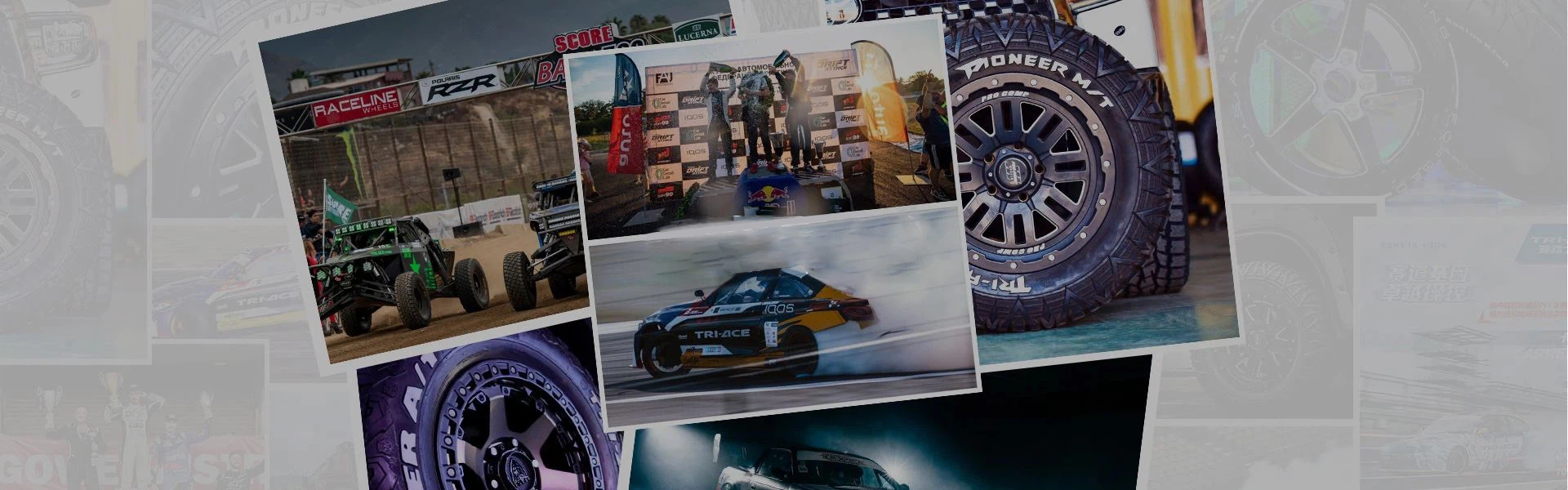
TRI-ACE TYRE has supported drift competitions and drivers since 2012, building experience in the international drifting community.
Our motorsport tire range is developed for customers looking for competition-oriented tire solutions.
If you are a drift team, importer or tire distributor, contact TRI-ACE TYRE to discuss available products, sizes and wholesale cooperation.
Frequently Asked Questions
Does tread pattern affect drift tire grip?
Yes, tread design can influence tire behavior, but grip also depends on compound, construction, pressure, temperature and track conditions.
Are slick tires better than treaded tires for drifting?
Not necessarily. The best option depends on the competition rules, track surface, vehicle setup and tire characteristics.
Do drift tires need directional tread patterns?
Not all drift tires use directional designs. The appropriate tread layout depends on the manufacturer's design and intended application.
Can tread pattern affect tire wear?
Yes. Tread block design, groove arrangement and tire construction can influence how loads are distributed and how the tread wears.
Conclusion
Tread pattern is an important part of drift tire design, but it should never be evaluated in isolation.
For consistent drift performance, drivers and teams should consider tread design together with compound, construction, tire size and operating conditions.
Looking for drift tires for your team or business? Contact TRI-ACE TYRE to explore our competition tire solutions.