
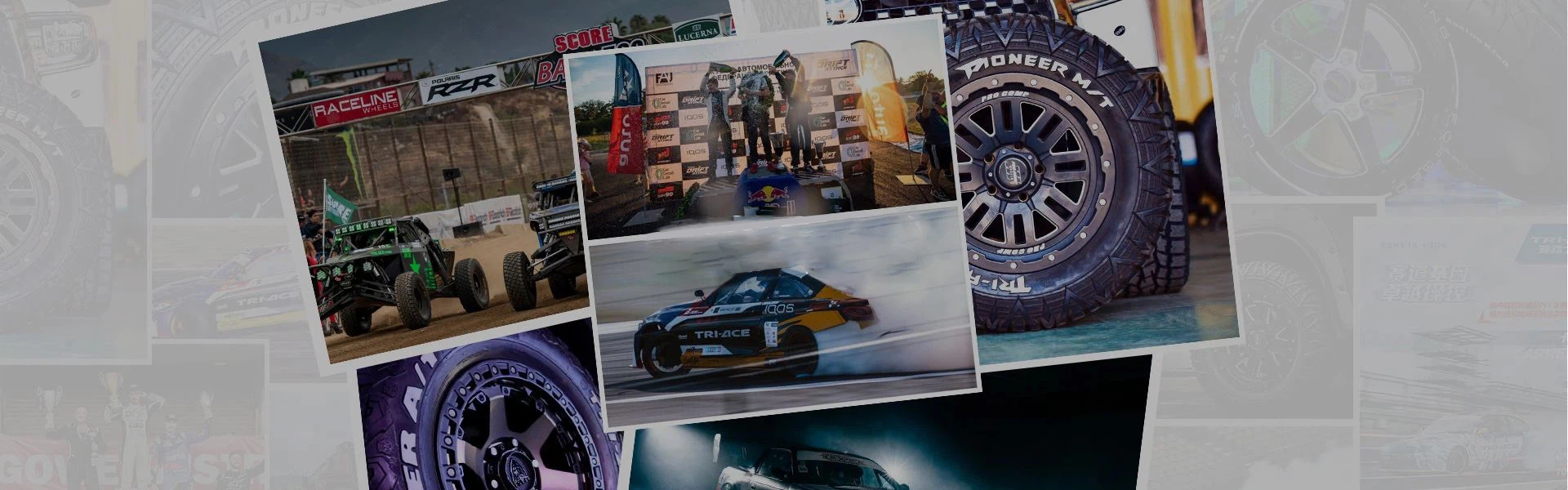
Choosing the right tires can make a significant difference in track performance, handling and consistency. However, track day tires and racing tires are not necessarily designed for the same purpose.
For drivers, racing teams and tire distributors, understanding their key differences helps ensure the right product is selected for each application.
1. What Are Track Day Tires?
Track day tires are designed for drivers who want to enjoy circuit driving without necessarily participating in professional competition.
Depending on the model, they may offer a balance of road usability, grip, durability and predictable handling. Some performance street tires are suitable for occasional track sessions, while more aggressive semi-slick tires are designed for dedicated track use.
The right choice depends on the vehicle, driving style, weather conditions and whether the tires must also be used on public roads.
2. What Are Racing Tires?
Racing tires are developed for specific motorsport applications, where grip, handling response and consistent performance under demanding conditions are important.
Different racing tires serve different purposes. Semi-slick tires may suit certain track-day and competition applications, while full slick tires are used in racing categories where their design is appropriate and permitted.
Drift tires have different requirements again, as drivers need to manage wheelspin, vehicle angle and traction throughout a run.
A tire designed for one motorsport discipline should not automatically be assumed to perform equally well in another.
3. Key Differences Between Track Day Tires and Racing Tires
| Feature | Track Day Tires | Racing Tires |
|---|---|---|
| Main purpose | Recreational circuit driving | Specific competitive applications |
| Grip requirements | Depends on tire category and intended use | Optimized for the intended racing discipline |
| Operating conditions | May need to accommodate varied driving conditions | Often developed around defined competition conditions |
| Road use | Some models are road-legal | Many models are competition-only |
| Selection priorities | Grip, durability, usability and cost | Application-specific performance, consistency and regulations |
These are general comparisons. Actual characteristics vary by product, and some track-day tires are also used in competition.
4. How to Choose the Right Tires for Your Needs
Before buying track or racing tires, consider four important factors.
Your driving purpose: Occasional track days, Time Attack, circuit racing and drifting have different requirements.
Your vehicle setup: Vehicle weight, power, suspension, wheel specifications and alignment all affect tire performance.
Your operating conditions: Track temperature, weather, session length and driving style can influence grip and wear.
Your budget and tire consumption: Compare not only the purchase price but also wear rate, consistency and the number of tires needed per event.
For business buyers, it is also important to confirm available sizes, supply arrangements and the intended applications of each product.
5. Explore TRI-ACE TYRE Competition Tires
TRI-ACE TYRE has supported drift events and drivers since 2012. For motorsport businesses seeking competition tire products, selecting the right category starts with understanding the needs of the target market.
Whether you supply racing teams, motorsport retailers or track enthusiasts, matching tire specifications to the intended application is essential.
Contact TRI-ACE TYRE to discuss competition tire options, available sizes and wholesale inquiries.
Frequently Asked Questions
Can I use track day tires for racing?
Some track-day tires are suitable for particular competition categories, but eligibility depends on the event regulations and tire specifications. Always check the applicable rules.
Are racing tires always better than track day tires?
Not necessarily. Racing tires are designed for specific applications. The best choice depends on the driving conditions, vehicle setup and performance requirements.
What is the difference between semi-slick tires and full slick tires?
Semi-slick tires generally have tread grooves, while full slick tires have a smooth tread surface. Their intended uses, operating characteristics and applicable regulations can differ significantly.
Conclusion
Track day tires and racing tires serve overlapping but distinct purposes. Choosing the right option requires considering the driving application, vehicle setup, operating conditions and competition regulations.
For racing tire distributors and motorsport businesses, understanding these differences helps customers find products suited to their needs.
Looking for competition tires for your market or team? Contact TRI-ACE TYRE to discuss your requirements.