
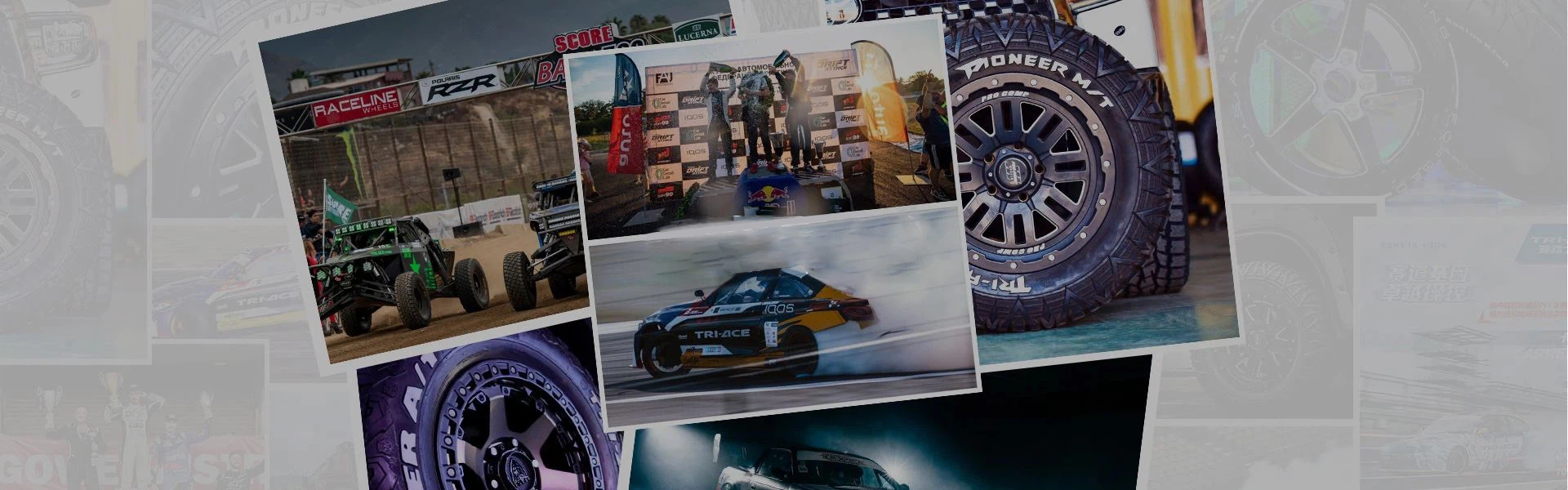
Racing tires are designed to deliver high levels of grip and predictable performance under demanding driving conditions. However, compared with ordinary road tires, competition tires can wear out much faster.
Why does this happen? The answer involves tire compounds, driving style, track conditions and vehicle setup.
For racing teams, understanding tire wear is essential for improving performance and controlling operating costs.
1. Softer Rubber Compounds
Many racing tires use specialized rubber compounds designed to provide high grip.
Softer compounds can conform more effectively to the track surface under suitable conditions, helping generate traction. However, they may also experience faster wear, particularly under aggressive driving and high temperatures.
This is why tire manufacturers must balance grip, durability and operating requirements when developing competition tires.
2. High Temperature and Friction
During racing, tires experience repeated deformation, cornering loads, braking and acceleration. These forces generate heat and contribute to tread wear.
If a tire operates outside its intended temperature window, its performance and wear characteristics may change.
Excessive heat can accelerate compound degradation, while insufficient temperature may prevent the tire from delivering its intended performance.
Proper pressure management and temperature monitoring can help teams identify potential problems.
3. Aggressive Driving Style
Driving technique has a significant influence on tire life.
Common causes of accelerated wear include:
Excessive wheelspin during acceleration.
Hard braking and repeated tire locking.
Aggressive cornering and excessive sliding.
Abrupt steering inputs.
Unnecessary tire scrubbing.
In drift racing, rear tires naturally experience substantial sliding and wheelspin. As a result, tire consumption can be particularly high during practice and competition.
4. Incorrect Vehicle Setup
Sometimes, uneven tire wear is not simply caused by the tire itself.
Vehicle setup can also play an important role. Incorrect camber, toe, tire pressure or suspension settings may create uneven contact and increase localized wear.
For example, excessive toe settings can contribute to accelerated tread wear, while unsuitable camber may cause uneven loading across the tread.
Teams should inspect tire wear patterns regularly and evaluate them alongside alignment and suspension data.
5. How Can Racing Teams Reduce Tire Wear?
Although competition tires naturally wear faster than many road tires, proper management can help improve their service life.
Use tire pressures recommended for the specific tire and application.
Monitor tire temperatures during testing.
Check wheel alignment and suspension settings.
Avoid unnecessary wheelspin and excessive sliding.
Inspect tread wear after each session.
Select compounds suited to the track surface and driving conditions.
The objective is not simply to make tires last longer. It is to achieve the right balance between tire life and competitive performance.
6. Choosing the Right Racing Tire
Different motorsport applications require different tire characteristics.
Drift tires need to provide controllable performance during sustained sliding. Circuit racing tires require suitable grip and consistency under repeated cornering loads. Track day tires may prioritize a different balance of performance and durability.
For tire distributors and racing teams, selecting products based on the intended application is more important than comparing prices alone.
Explore TRI-ACE TYRE Competition Tires
TRI-ACE TYRE has supported drift competitions and drivers since 2012, developing its presence in the international motorsport market.
For racing teams, importers and distributors looking for competition tire solutions, choosing the right product starts with understanding driving conditions, vehicle specifications and performance requirements.
Contact TRI-ACE TYRE to discuss available tire sizes, product applications and wholesale cooperation.
Frequently Asked Questions
Why do racing tires wear faster than street tires?
Racing tires are often designed around specific performance requirements, including high grip and demanding operating conditions. These characteristics can result in faster wear.
Does higher grip always mean faster tire wear?
Not necessarily. Grip and wear depend on compound formulation, construction, temperature, pressure, track surface and driving conditions.
Can incorrect tire pressure cause uneven wear?
Yes. Pressure that is too high or too low can change tread loading and contribute to uneven wear.
How often should racing tires be inspected?
Tires should be inspected before and after each session, with additional checks during longer events or demanding conditions. Look for uneven wear, cuts, cracking, blistering and other signs of damage.
Conclusion
Fast tire wear is a normal consideration in motorsport, but excessive or uneven wear may indicate problems with driving technique, tire pressure or vehicle setup.
By monitoring tire condition and selecting the right compound for each application, racing teams can improve consistency and manage tire costs more effectively.
Looking for reliable competition tire solutions? Contact TRI-ACE TYRE to discuss your requirements.